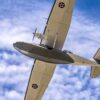

Once again, I bring you a round-up of Catalina News from around the globe. This regular round-up is taken from the Autumn/Winter edition of The Catalina News magazine, sent to subscribing members of The Catalina Society. See the ‘Memberships’ tab on this website for details of how to join and support the continued airworthiness of the Catalina Miss Pick Up.
Our Catalina Society website has a regularly updated summary of all surviving Catalinas – just use the ‘Survivors’ tab to check it out. A reminder that, for consistency, I quote type designations as given when airframes were built which are not necessarily how aircraft are now registered, an example being our G-PBYA, built as a Canso A, later modified to a Canso 2F but registered on the UK civil aircraft register as a PBY-5A.
The airworthy population of Catalinas and Cansos now stands at seven if the definition of airworthy assumes an airframe has flown in recent months, certainly in the past year. The ‘new’ aircraft is the oldest airworthy example in the world – PBY-5A N459CF. Owned by The Collings Foundation Inc DBA, it flew again this summer after an extensive rebuild to original condition and just in time to appear at AirVenture in Oshkosh, Wisconsin where it won two prestigious awards – see story elsewhere in this issue. The other six airworthy examples are our own UK-based Canso A G-PBYA Miss Pick Up; Canso A C-FNJE with the Fairview Aircraft Restoration Society at Fairview, Alberta; the Canadian Warplane Heritage Canso A C-FPQL at Hamilton, Ontario; Canso A N427CV at the National Museum of WWII Aviation, Colorado Springs, Colorado; PBY-5A N9521C with the Fighter Factory collection at Virginia Beach, Virginia; and Canso A N9767 with Soaring By The Sea Foundation, Eugene, Oregon. So, of these seven, only two are former US Navy PBY-5As, the remainder being ex-Royal Canadian Air Force Canso As. All bar N9521C owe their continued existence to being firefighting waterbombers for a long period of their post-military life. There are at least four or five other examples that are potential flyers but have not been airborne for some while including aircraft in Australia, Canada, Greece and the USA.
So, to the USA where the Kalamazoo Air Zoo at Kalamazoo, Michigan continues to restore the PBY-5A formerly N607CC for the Pearl Harbor Aviation Museum. Originally with the US Navy as BuNo 46602, it later served with the Mexican Navy before becoming a waterbomber with Victoria, BC-based The Flying Fireman Ltd. By 1994 it had gone to the National Museum of Naval Aviation, later the National Naval Aviation Museum, at Pensacola by which time it was on the US register as N607CC. It was left in outdoor storage for many years, gradually showing the effects of the weather including storm damage. A loan to the museum in Hawaii was agreed in 2023 but it is being restored in Michigan before being shipped. Currently, the tail is being worked on as are the engine cylinders although the intention is that she will not be rebuilt as a ‘flyer’.
In Issue 105, I mentioned the ‘mishap’ that Canso A N222FT had encountered when landing at Mark Anton Airport, Dayton, Tennessee on October 31st last year. More news has now come out about this incident including the US NTSB report, and it is apparent that the groundloop resulting from the left main gear leg folding during the landing run has caused considerable damage – see the article earlier in this edition. Formerly a frequent flyer, I am no longer including it in my list of airworthy examples although it is hoped that it may swell the ranks again one day.
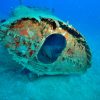
I rarely write about undersea wrecks in this column as it is debatable whether they are ‘survivors’. However, Ewan Stevenson keeps me updated on the subject and a while ago advised me that, some years ago, he had undertaken a dive with colleague Bob Norton on a Catalina wreck near Gavutu Island, close to the wartime Halavo flying boat base on Florida Island in the Solomon Islands. The Catalina is PBY-5 BuNo 08136, a VP-44 squadron machine, plane number 44-P-8 that sank after a forced alighting with double engine failure after takeoff from Halavo Beach on March 24th, 1943. The wreck was raised by the yard net tender YN-4 USS Butternut for salvage and at some point after that it was cannibalised for spare parts then cut up into sections, loaded onto a barge and scuttled in Gavutu harbour in the outer Halavo Bay. Its remains are still there, having been discovered during a survey by Sealark Exploration Inc. Ewan Stevenson reports that the various sections of the PBY are scattered on the sand seafloor and form a ‘garden’ of Consolidated fabrication, bluefin trevallies and deep-water marine growth. Ewan has named the wreck site ‘The Catalina Garden’.
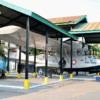
Fellow Air-Britain member Andy Marden has confirmed the continued existence of the hull of Canso A, RCAF serial 9825 on a recent visit to Uxbridge, Ontario, Canada. The wing-less and derelict hull is owned by Vince O’Connor and his part of his O’Con-Aircraft Supplies business, aka The Movie Hangar Inc. The hull has recently been painted in a bright blue scheme, definitely non-standard for the RCAF! After Royal Canadian Air Force service, it was surplussed in 1950 and found its way into the famous Canso collection of Brighton, Ontario-based farmer George Ventress. It was later sold to Harold Carlaw and spent time in his Memorial Military Museum at Campbellford, Ontario before passing to the Canadian Warplane Heritage in 2010. For reasons unknown, CWH did not keep it for long, and it was sold to Vince O’Connor around 2016/7. It will be interesting to see what happens to it ultimately.
Now to Australia. At the Merredin Military Museum in Merredin, Western Australia work continues to bring the former Royal Australian Air Force (RAAF) PBY-5 A24-46 up to display standard. That said, recent photographs courtesy of Down Under Aviation News show that not too much has happened in recent months although the wing is now supported by struts and that the starboard engine mount is in place.
A while ago, I was told that the restored hull of Canso A ex-VH-EXG, previously on display at the RAAF Museum at RAAF Base Point Cook, Victoria was no longer evident there. Formerly a Wright Cyclone-engined ‘Super Catalina’ used in Australia for geological survey work, it had been restored back to wartime PBY-5A status complete with bow and blister turrets although had remained wingless. Painted in overall Foliage Green, it had been given the serial A24-104 and hull code NR-H to represent an aircraft of 113 ASR Flight from the mid-summer of 1945. I contacted David Gardner, Senior Air Force Heritage Collections Manager with the RAAF’s Collections Directorate: History and Heritage Branch at Point Cook, and he confirmed that the hull had been moved into storage as a result of a major upgrade of displays within the museum. Back in 1989 when serving in the RAAF, he was responsible for acquiring VH-EXG when it was put on the market so his involvement with this Catalina goes back a long way. He is now managing the restoration of the wings which are nearly complete and will then oversee the restoration of the empennage, so it is hoped that one day the entire airframe will be assembled and displayed. The outer wings and trailing edges are currently located at Wangaratta, Victoria and the wing centre section will go there for restoration in due course.
The PBY-6A VH-PBZ, once a regular flyer with Historic Aircraft Restoration Society at Albion Park/Shellharbour Airport, Sydney, NSW is still undergoing a lengthy period of restoration and repair. My contact there, Peter Costigan, reports that a large section of trailing edge is having its fabric replaced whilst another is being repaired after corrosion was detected. Aileron control tubes and support structures will be replaced when time and manpower allow.
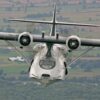
And finally, to the RAF Museum Midlands at RAF Cosford where the former Royal Danish Air Force PBY-6A L-866 continues to languish outdoors, deteriorating month by month. The accompanying photo taken in May this year shows damage to the starboard horizontal stabiliser – the port unit is just as bad.
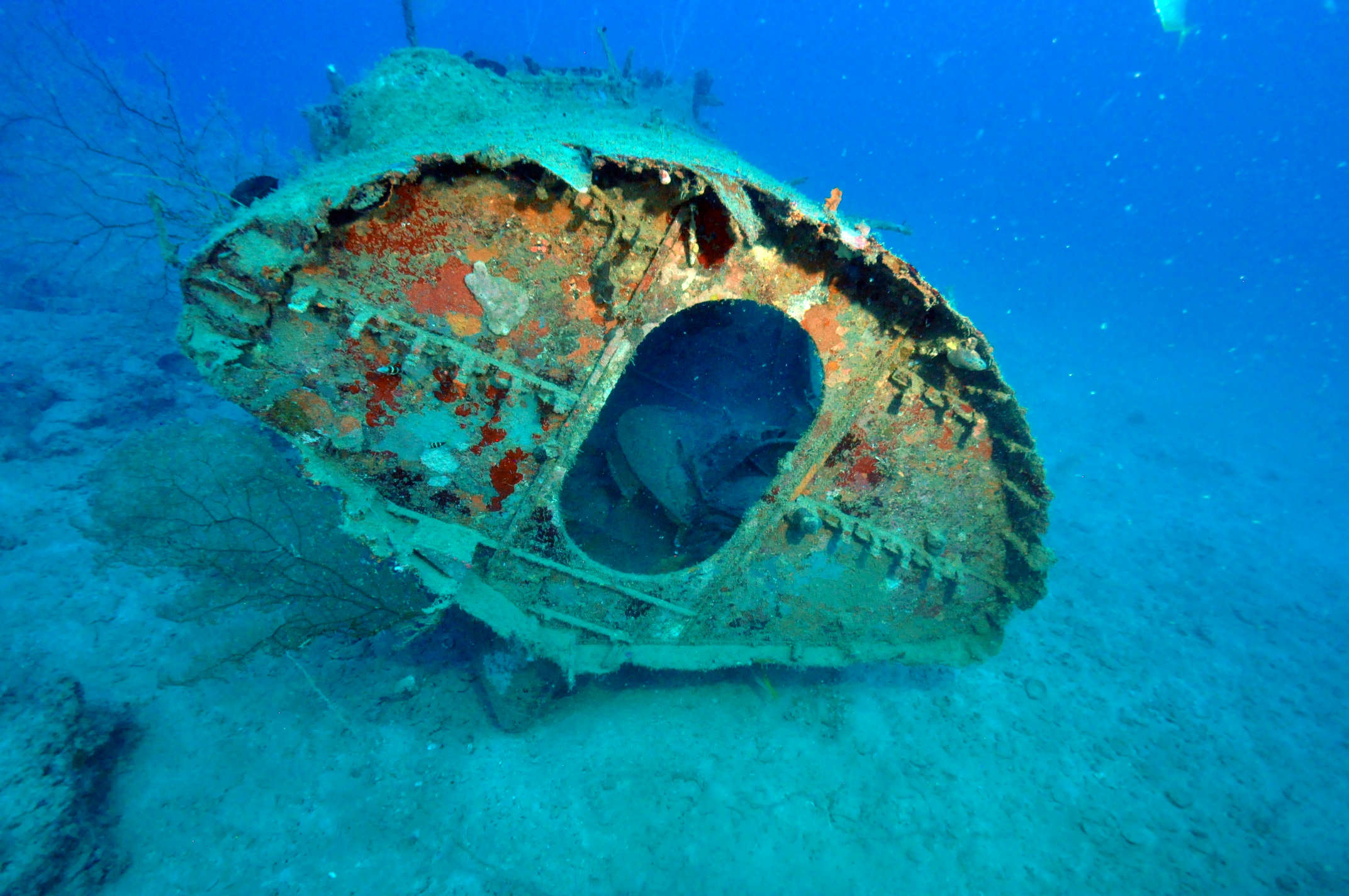
Clearly identifiable as coming from a PBY, this amazing photo was taken by Ewan Stevenson near Gavutu Island and shows BuNo 08136’s rear hull blister area and the curved gunner’s platform insideClearly identifiable as coming from a PBY, this amazing photo was taken by Ewan Stevenson near Gavutu Island and shows BuNo 08136’s rear hull blister area and the curved gunner’s platform inside
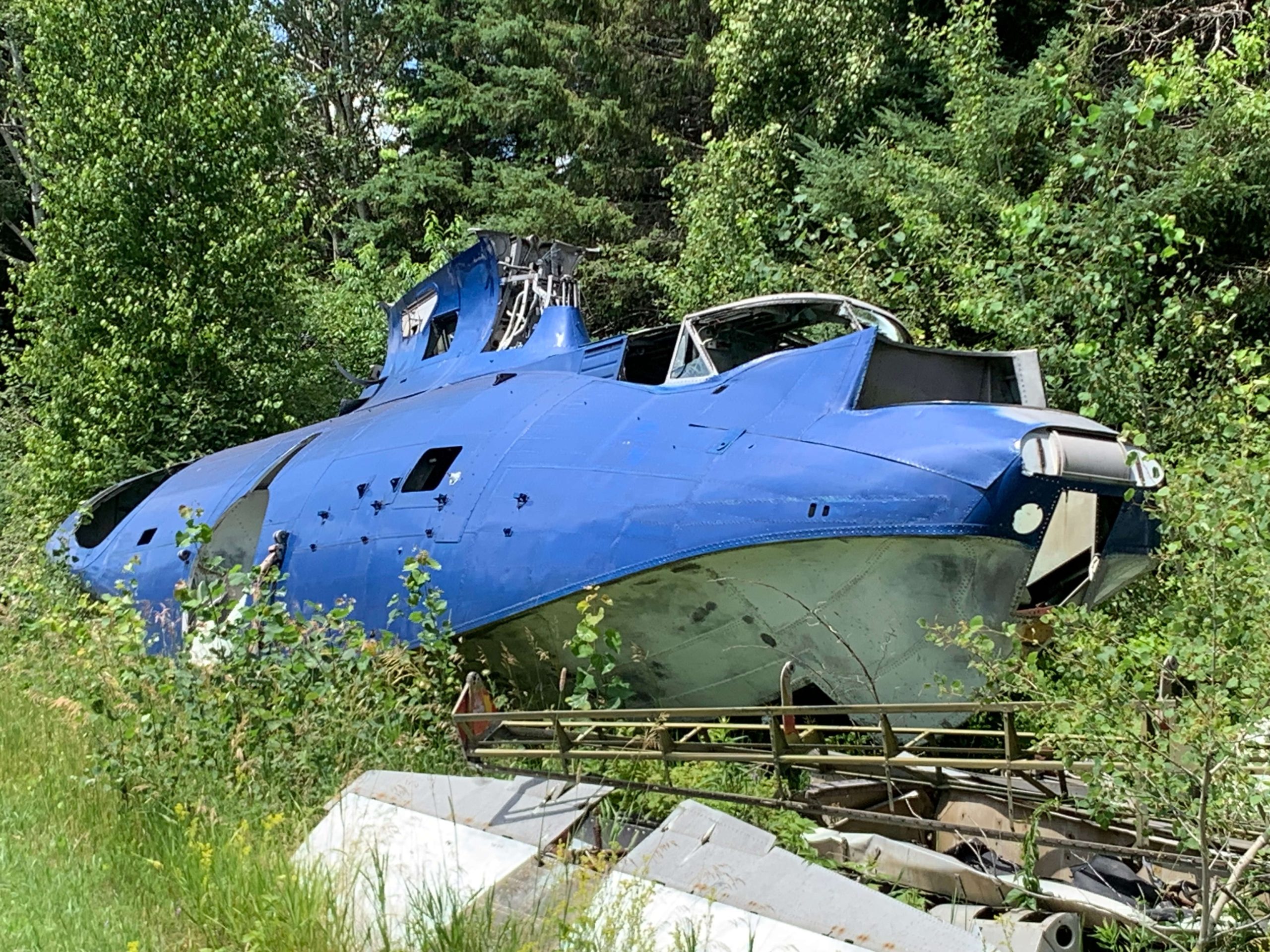
Andy Marden’s recent photo of the one-time RCAF Canso A, serial 9825, at Uxbridge, Ontario
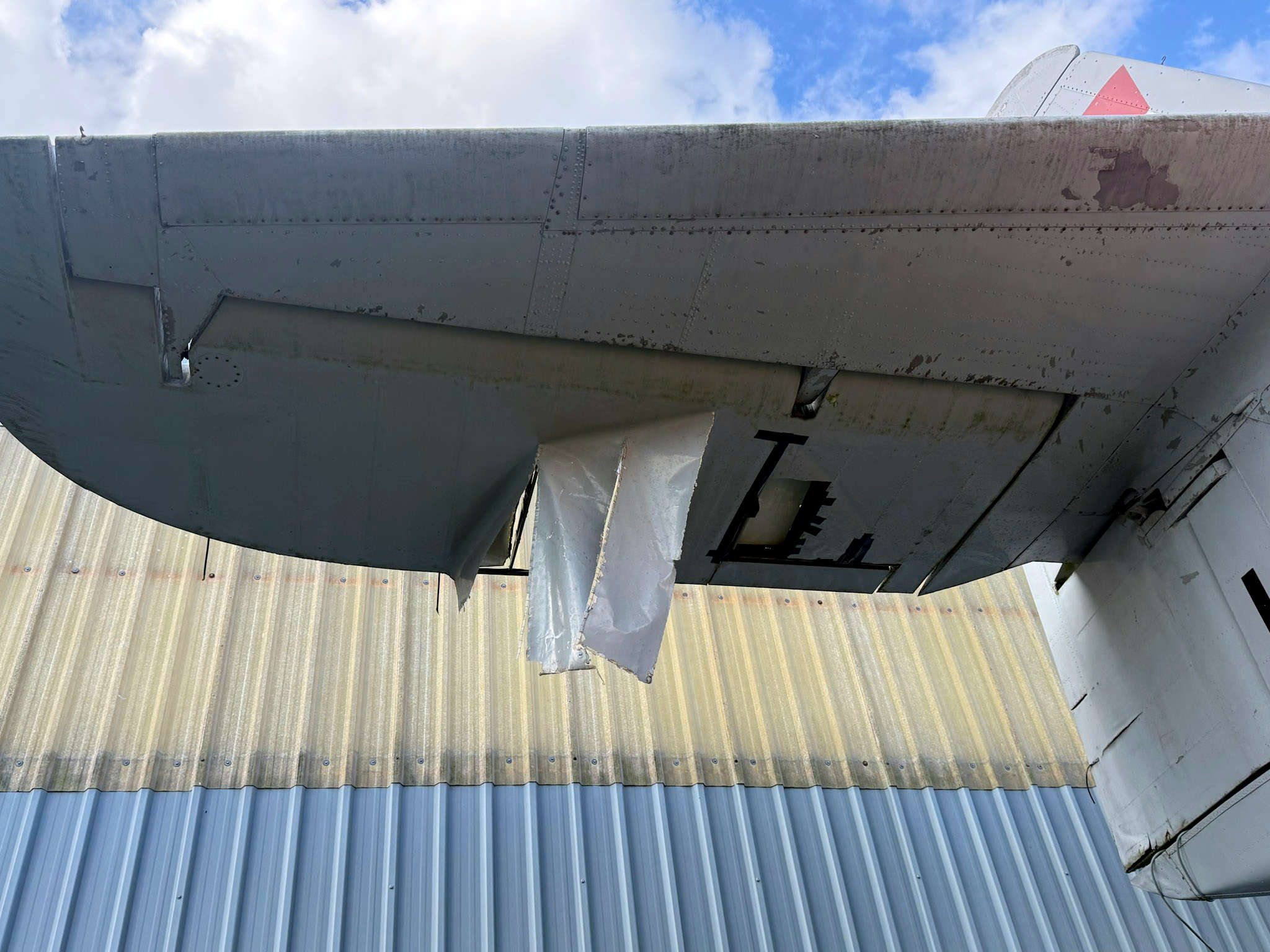
The PBY-6A L-866 at RAF Museum Midlands, Cosford continues to deteriorate out in the open. What will become of her? Stephen McIndoe